> For the complete documentation index, see [llms.txt](https://docs.ozone.one/ozone-end-user-guide/llms.txt). Markdown versions of documentation pages are available by appending `.md` to page URLs; this page is available as [Markdown](https://docs.ozone.one/ozone-end-user-guide/documentation/ci-cd/triggers/triggering-a-pipeline-and-or-a-release-run/from-harbor-events.md).
# From Harbor events
WebhooksSuppose users want to trigger a pipeline or release on Pushing an artifact on Harbor, they can create a webhook using the webhook type as **Harbor**.
### **Steps to create a Harbor Webhook for release**
**Pre-requisites:**
* An active Harbor account with registries needs to have the username, password, and the instance URL
* An Active cluster
* A Release that has been created from the Release Templates section
**Steps**
1. On click of the **create webhook** button, a modal window appears in which we can enter the details for webhook creation
2. Now we need to select the Webhook Type as Harbor from the **Webhook Type** dropdown
3. After selecting the Webhook type as **Harbor**, an option will be shown to select the registries
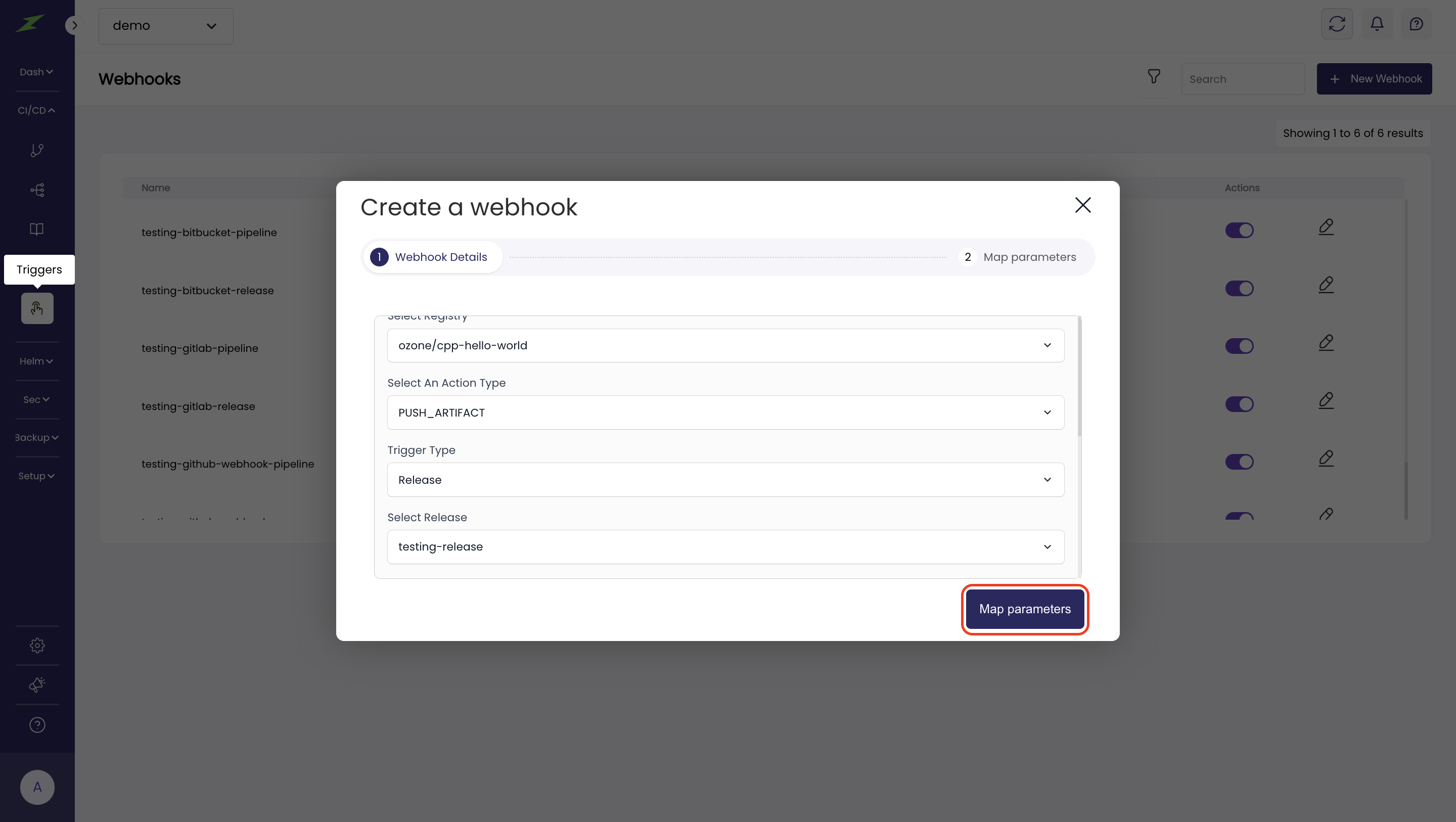
4. Once the Registry has been selected users need to select the **Action type**, for Harbor there is only 1 action type which is to **Push Artifact,** whenever an artifact is pushed to a registry the pipeline or release will be triggered
5. Once the Action type has been selected, users can select what they want to be triggered **pipeline or release**
Here we will select the trigger type as the release\
\
6\. After this users can select the release which they want to be triggered
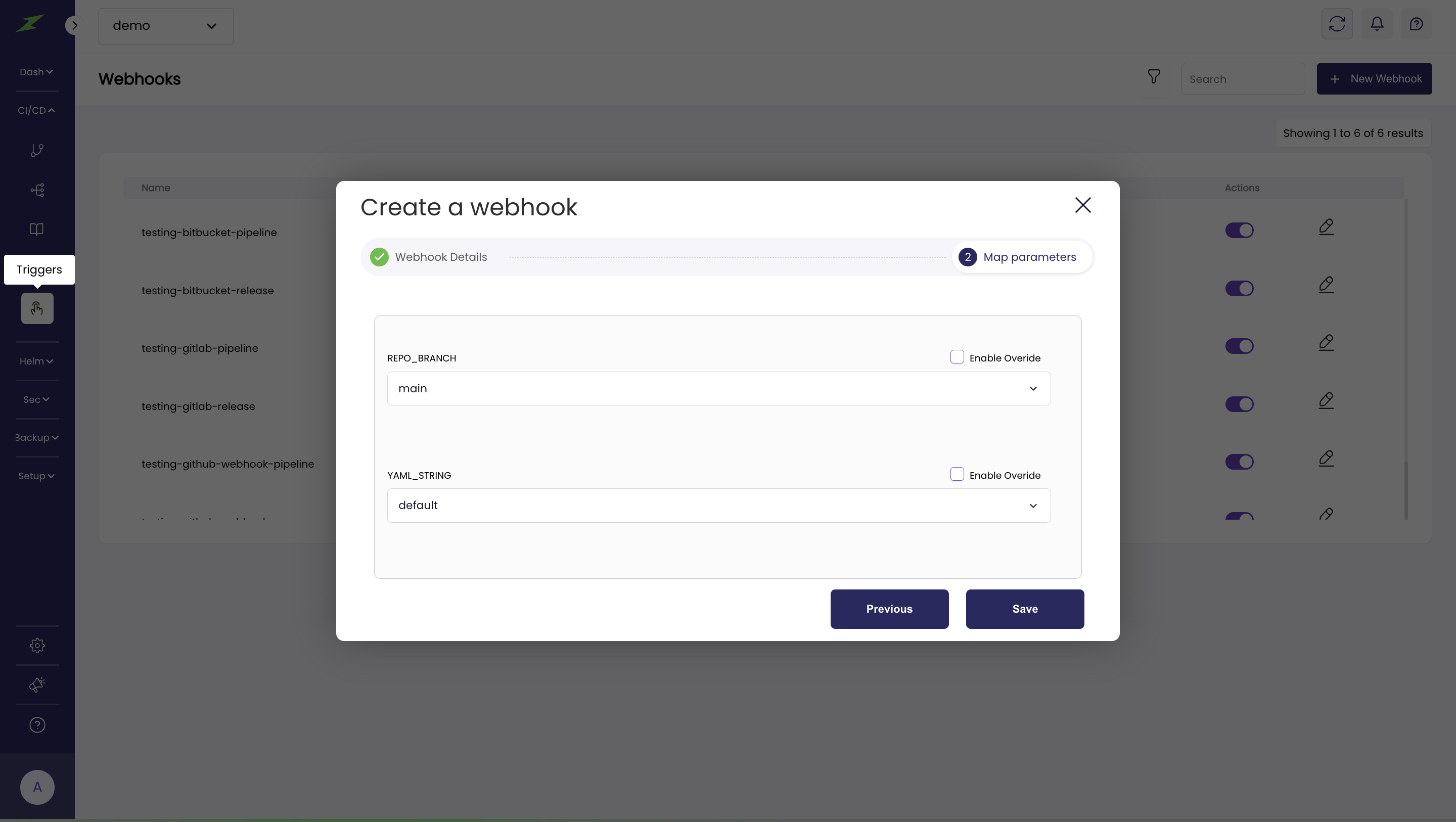
7. Once every option has been selected the **map parameters** option will be enabled and users can click on it to move to the next step
8. After going to the second step users can choose the **input run parameters**, once all these options have been selected, users can click on the save button to create the webhook
This is how webhooks are created for a Harbor registry for a release\
**Steps to create Harbor webhook for pipeline**
**Pre-requisites:**
* An Active cluster
* A microservice
Follow the same steps until **Step 4** of Creating Webhooks for release
1. Once the registry and the action type have been selected, select the release type as the pipeline
2. Once the Trigger type has been selected, now select the pipeline that needs to be triggered
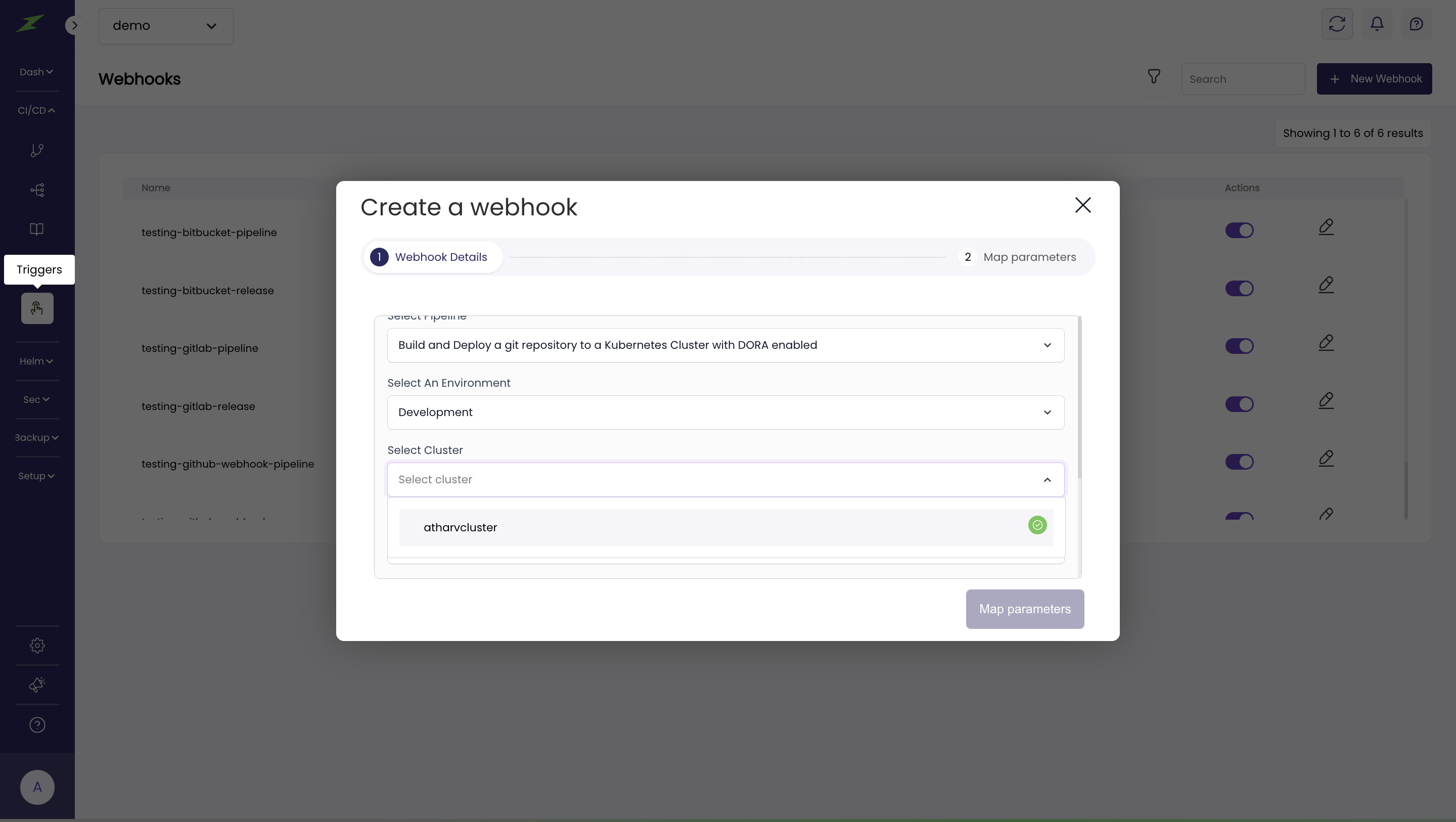
3. After selecting the pipeline, select the environment in which the webhook needs to be created\
**Remember to select the environment the same in which the cluster has been created**
4. After selecting the environment, users will be shown an option to select the cluster
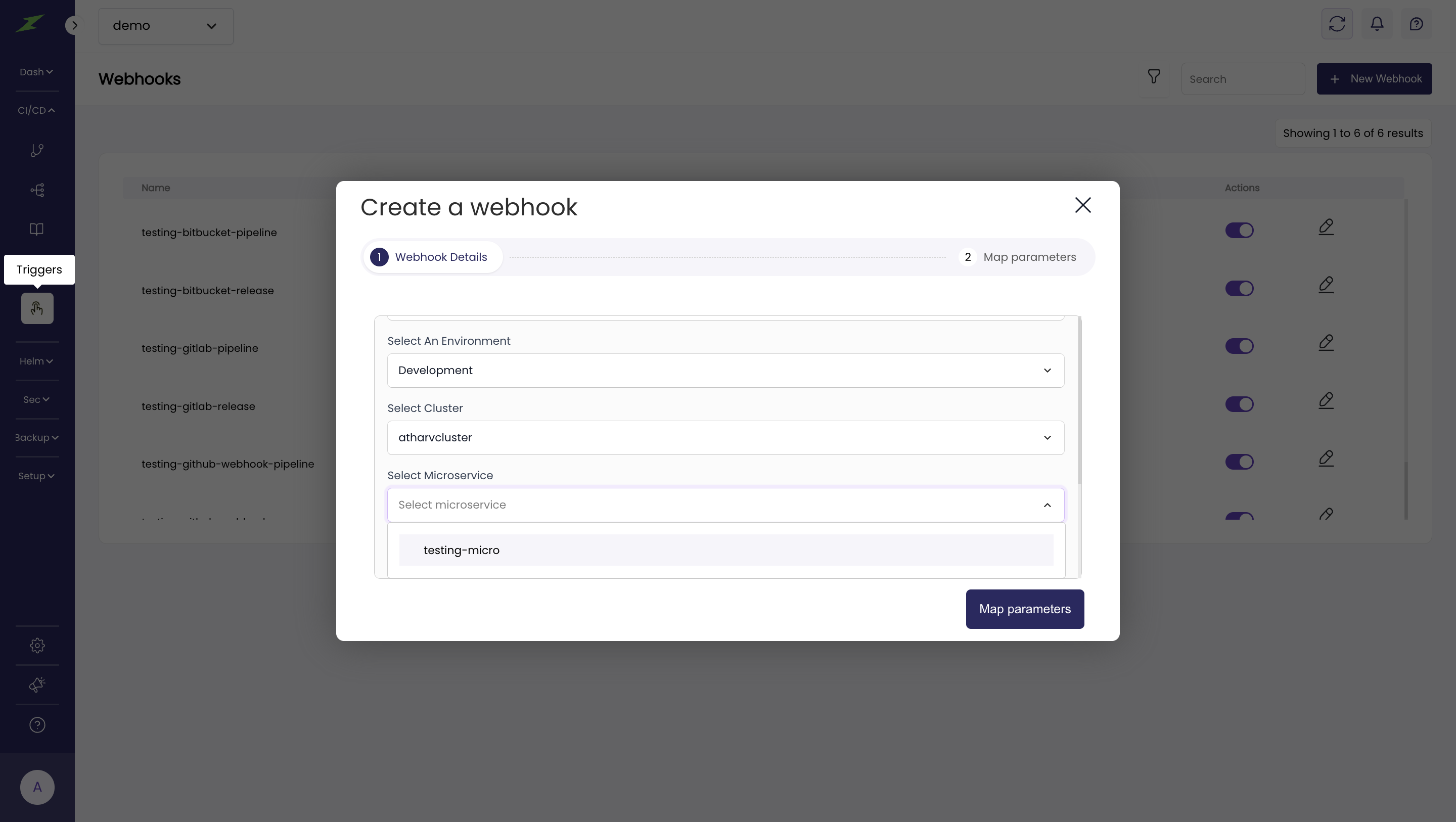
5. Once the cluster has been selected, select the microservice
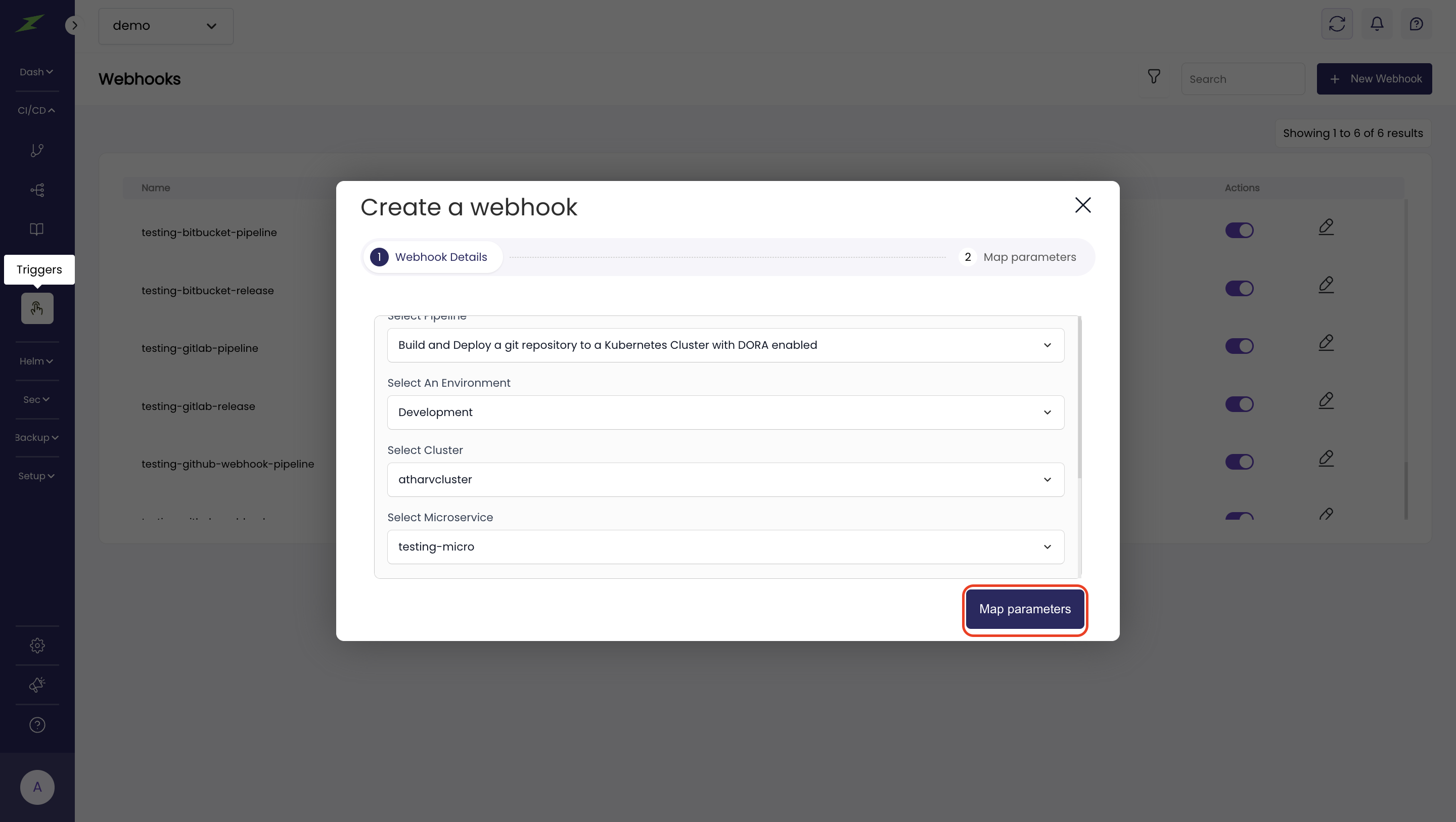
6. After selecting the microservice, users can move to the **Map parameters** step, to select the run parameters for the pipeline
7. In **Map parameters,** users can select all the options as they desire
8. Once all this is done, users can click on the **Save** button to create the webhook for the pipeline.
This is how Harbor webhooks are created for releases and pipelines.

.png?alt=media&token=f04bf389-4911-48be-a0df-e09372f76c5e)


.png?alt=media&token=d6d44aa2-2282-4ad5-b7f7-dcd9ec55fff6)
.png?alt=media&token=a6049ef8-8262-40ab-b9b9-a9e221c99285)